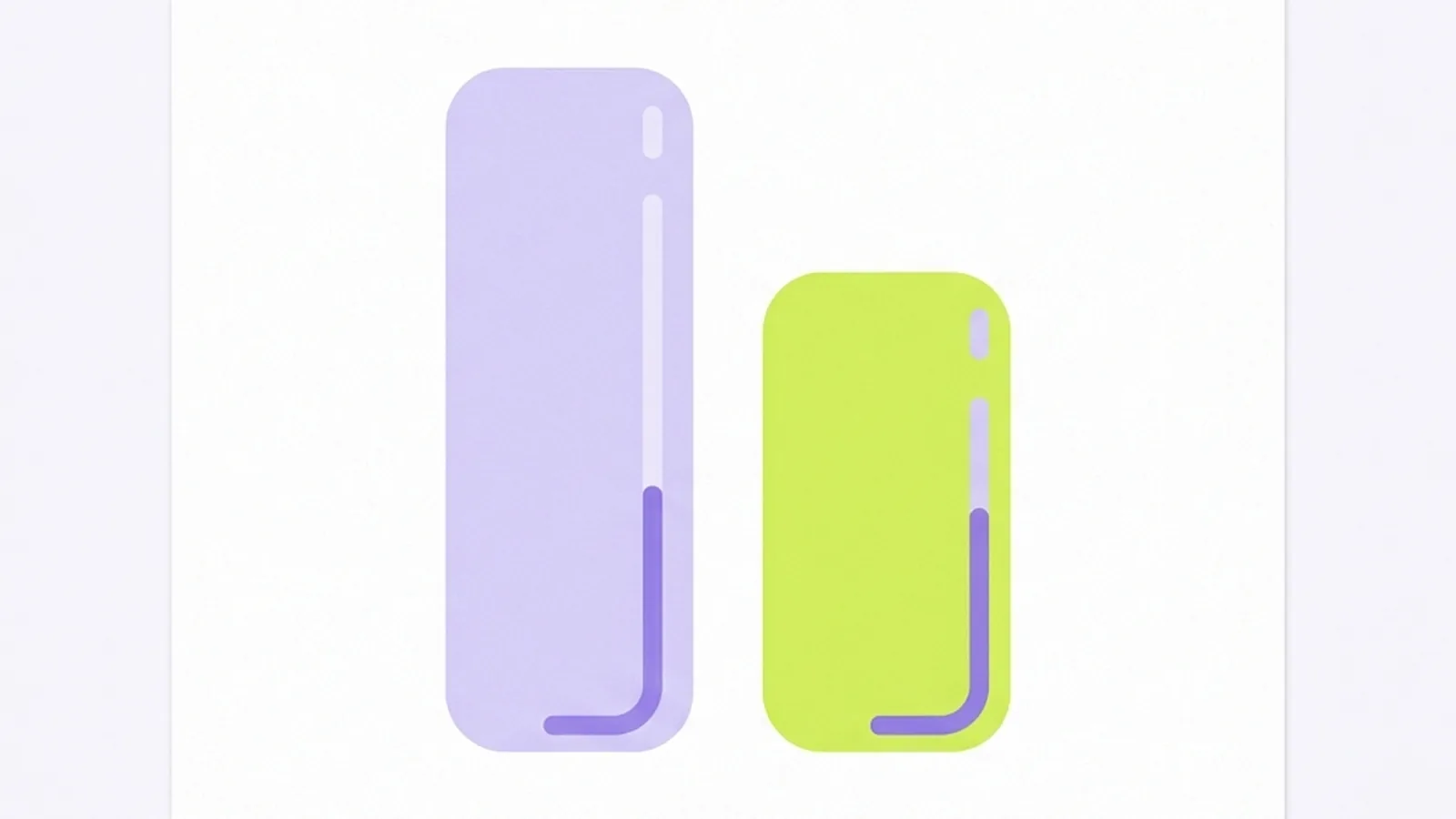
- In the 72-week STEP UP trial of 1,407 adults with obesity and without diabetes, average weight loss was 18.7% on semaglutide 7.2 mg, 15.6% on 2.4 mg and 3.9% on placebo.1
- The extra dose brought more side effects, most notably dysesthesia, an altered skin sensation: 22.9% on 7.2 mg vs 6.0% on 2.4 mg.1
- The current US Wegovy label includes 7.2 mg as a maximum dose for adults losing weight who have tolerated 2.4 mg for at least 4 weeks.3 Whether it fits you is a question for your prescriber.
What is Wegovy 7.2 mg?
Wegovy is semaglutide, the same medicine as Ozempic, approved in the US for weight reduction and other uses. Its usual maintenance dose is 2.4 mg once weekly. The current US label (revised June 2026) adds a higher dose: for adults who have tolerated 2.4 mg for at least 4 weeks and when more weight loss is clinically indicated, the dose may be increased to a maximum of 7.2 mg once weekly.3
The 7.2 mg dose comes as a single-dose pen, 7.2 mg in 0.75 mL, sold as Wegovy HD. The label says its safety and effectiveness have not been established in children or in people with MASH, a fatty liver disease.3 For the full step-up schedule, see Wegovy and Zepbound dose schedule.

The STEP UP trials
Novo Nordisk, the maker of Wegovy, funded two 72-week trials. In both, people were randomly assigned to 7.2 mg, 2.4 mg or placebo, alongside a lifestyle program, and neither they nor their doctors knew which.1,2
- STEP UP: 1,407 adults with a BMI of 30 or more and no diabetes, in 11 countries. Most (73.7%) were women; the average age was 47, average weight 113.0 kg and average BMI 39.9. Five people got 7.2 mg for every one on 2.4 mg or placebo.1
- STEP UP T2D: 512 adults with a BMI of 30 or more and type 2 diabetes (HbA1c 7.0% to 10.0%). The average age was 56 and average BMI 38.6.2
According to the label, people reached their dose over 20 weeks and then stayed on it for 52 weeks.3
Wegovy 7.2 mg results: how much weight did people lose?
In STEP UP, 7.2 mg led to 3.1 percentage points more weight loss than 2.4 mg, and 14.8 points more than placebo.1 These figures count everyone who was randomized, including people who stopped treatment. The label's own analysis of the same trial gives nearly identical numbers (18.8%, 15.5% and 3.9%).3
The bigger difference is in how many people reached large losses. The label reports these shares for the two trials:3
| At week 72 | Placebo | 2.4 mg | 7.2 mg |
|---|---|---|---|
| STEP UP (obesity, no diabetes) | |||
| Average weight change | −3.9% | −15.5% | −18.8% |
| Lost at least 15% | 7.5% | 52.3% | 63.8% |
| Lost at least 20% | 2.8% | 32.3% | 45.5% |
| STEP UP T2D (obesity and type 2 diabetes) | |||
| Average weight change | −3.8% | −10.4% | −13.2% |
| Lost at least 15% | 6.9% | 27% | 39.8% |
| Lost at least 20% | 2% | 13.5% | 20.6% |
In STEP UP T2D, the published paper reports 13.2% weight loss on 7.2 mg vs 3.9% on placebo, and a drop in HbA1c, the long-term blood sugar measure, that was 1.5 points larger than on placebo.2 In these trials, people with type 2 diabetes lost less weight than people without it. For context across medicines, see GLP-1 weight loss results and semaglutide vs tirzepatide.
Wegovy 7.2 mg side effects
Stomach side effects were more common on 7.2 mg than on 2.4 mg in STEP UP, and similar between the two doses in STEP UP T2D:1,2
| Side effect | Placebo | 2.4 mg | 7.2 mg |
|---|---|---|---|
| Stomach side effects, STEP UP | 42.8% | 61.2% | 70.8% |
| Stomach side effects, STEP UP T2D | 25.5% | 51.5% | 53.1% |
| Dysesthesia, STEP UP | 0.5% | 6.0% | 22.9% |
| Dysesthesia, STEP UP T2D | 0% | 4.9% | 18.9% |
| Serious adverse events, STEP UP | 5.5% | 10.9% | 6.8% |
| Serious adverse events, STEP UP T2D | 8.8% | 8.7% | 9.1% |
Pooling both trials, the label lists nausea in 39% of people on 7.2 mg, 35% on 2.4 mg and 13% on placebo; vomiting in 22%, 16% and 6%; and hair loss in 6%, 3% and 1%.3 See also GLP-1 nausea and stomach side effects and GLP-1 hair loss.
What is dysesthesia on Wegovy 7.2 mg?
Dysesthesia is an unpleasant or altered skin sensation. The label groups several terms under it, including tingling (paresthesia), burning skin, sensitive skin, pain of the skin and allodynia, which is pain from a touch that would not normally hurt. The label says its frequency rose with higher doses and higher drug levels in the blood.3 At steady state, average semaglutide levels were about 230 nmol/L on 7.2 mg vs about 75 nmol/L on 2.4 mg.3
The label describes what happened to the 288 people who had dysesthesia on 7.2 mg in the trials:3
Another 8% paused treatment. Most people whose dose was paused, lowered or stopped recovered, and their symptoms resolved faster than when nothing was changed. Of 38 people who recovered and were stepped back up to 7.2 mg, 17 (45%) had the sensation return.3 If you notice new skin sensations, tell your prescriber.
How many people stopped treatment?
Across both trials, the label reports that 5% of people on 7.2 mg, 5% on 2.4 mg and 2% on placebo stopped treatment for good because of side effects. Stomach side effects were the most common reason: 3%, 3% and 0.3%.3 In STEP UP alone, 5.4% on 7.2 mg stopped because of side effects vs 1% on placebo.3
Wegovy 7.2 mg price
On 6 November 2026, Novo Nordisk's NovoCare page listed self-pay pricing starting at $399 a month for the Wegovy HD 7.2 mg pen, for people who fill through NovoCare home delivery or use its savings offer. For people with commercial insurance, it listed a savings offer that can bring the cost to as little as $25 a month, with a maximum saving of $100 a month. Eligibility rules apply, and Novo Nordisk says it can change the program at any time.4 For more on costs, see Zepbound and Wegovy cost.
Common questions
What are the Wegovy 7.2 mg results?
In the 72-week STEP UP trial of 1,407 adults with obesity and without diabetes, average weight loss was 18.7% on semaglutide 7.2 mg, 15.6% on 2.4 mg and 3.9% on placebo. In STEP UP T2D, in 512 adults with obesity and type 2 diabetes, it was 13.2% on 7.2 mg vs 3.9% on placebo.
What are the side effects of Wegovy 7.2 mg?
In STEP UP, stomach side effects were reported by 70.8% of people on semaglutide 7.2 mg, 61.2% on 2.4 mg and 42.8% on placebo. Dysesthesia, an altered skin sensation such as tingling, burning or sensitive skin, affected 22.9% on 7.2 mg vs 6.0% on 2.4 mg and 0.5% on placebo.
Wegovy 7.2 vs 2.4: how much more weight loss?
In the STEP UP trial in adults with obesity, 7.2 mg led to 3.1 percentage points more weight loss than 2.4 mg after 72 weeks (18.7% vs 15.6%). According to the US label, 45.5% of people on 7.2 mg lost at least 20% of their weight, vs 32.3% on 2.4 mg.
Is Wegovy 7.2 mg FDA approved?
Yes. The current US Wegovy label, revised in June 2026, lists 7.2 mg once weekly as a maximum dose for adults losing weight who have tolerated 2.4 mg for at least 4 weeks and need more weight reduction. It is sold as a single-dose pen called Wegovy HD.
What is the Wegovy 7.2 mg price?
On 6 November 2026, Novo Nordisk's NovoCare site listed self-pay pricing starting at $399 a month for the Wegovy HD 7.2 mg pen, through NovoCare home delivery or its savings offer. Prices and eligibility change, so check NovoCare or your pharmacy for the current cost.
Sources
- Wharton S, Freitas P, Hjelmesæth J, et al. Once-weekly semaglutide 7·2 mg in adults with obesity (STEP UP): a randomised, controlled, phase 3b trial. Lancet Diabetes Endocrinol. 2025;13(11):949-963. doi:10.1016/S2213-8587(25)00226-8 · PubMed
- Lingvay I, Bergenheim SJ, Buse JB, et al. Once-weekly semaglutide 7·2 mg in adults with obesity and type 2 diabetes (STEP UP T2D): a randomised, controlled, phase 3b trial. Lancet Diabetes Endocrinol. 2025;13(11):935-948. doi:10.1016/S2213-8587(25)00225-6 · PubMed
- US prescribing information: WEGOVY (semaglutide) injection and tablets. DailyMed, revised 06/2026. Sections 2.2, 3, 6.1, 8.4, 12.3 and 14.2.
- NovoCare (Novo Nordisk). Wegovy savings offer and pricing. Checked 6 November 2026.
